

Fact: On the GMAT Quantitative Section, you cannot use a calculator.
Therefore, if you are aiming to tackle even the 700-800 questions on the Q section, you need to have some crafty mental math tricks up your sleeve. One of the most powerful involves the clever use of a famous algebra formula: the difference of two squares formula. See this post for uses of that formula in general problem solving. Here we will focus on factoring.
Factoring Big Numbers
In general, factoring a big number can be time-consuming without a calculator. The GMAT might ask a question in which you need to know the factors, or the prime factorization, of a large number. See this post for more on prime factorizations.
First of all, notice how easy it is to square the multiples of 10. If you can square the numbers from 1 to 10, you can square the multiples of 10 from 10 to 100.


Those should all be recognizable as nice round perfect squares.
Now, suppose you are in a situation in which you have to factor, say, 1591, or 3551, or 8099. Notice, all of those are a perfect square less than one of these multiples of ten squared.




In general, the GMAT is not going to put you in a situation in which you have to find the prime factorization of a general four digit number. If this situation does arise, you can bet there’s an enormously simplifying trick available, and factoring via the difference of two squares is an awfully likely candidate for that trick.
Factoring Decimals
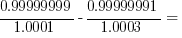
Just as the difference of two square can simplify factoring big numbers, it can also simplify factoring decimals. To demonstrate this, I am going to show the solution to a flamboyantly recondite question from the OG13e, viz., PS #199 on p. 180.
199) 
(A) 
(B) 
(C) 
(D) 
(E) 
Notice that 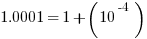 , and
, and 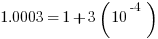 .
.
Now, notice that both numerators simplify via difference of two squares formula.


Thus, the two fractions become
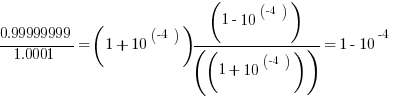
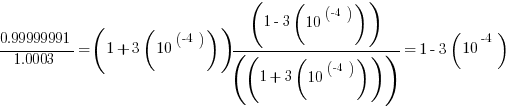
The difference:

Answer = D
Here’s a related practice question.
http://gmat.magoosh.com/questions/129





Leave a Reply